
Full Arch Implant Treatment Planning: How Prosthodontists Prevent Mistakes
Full Arch Implant Treatment Planning: How Prosthodontists Prevent Common Implant Mistakes
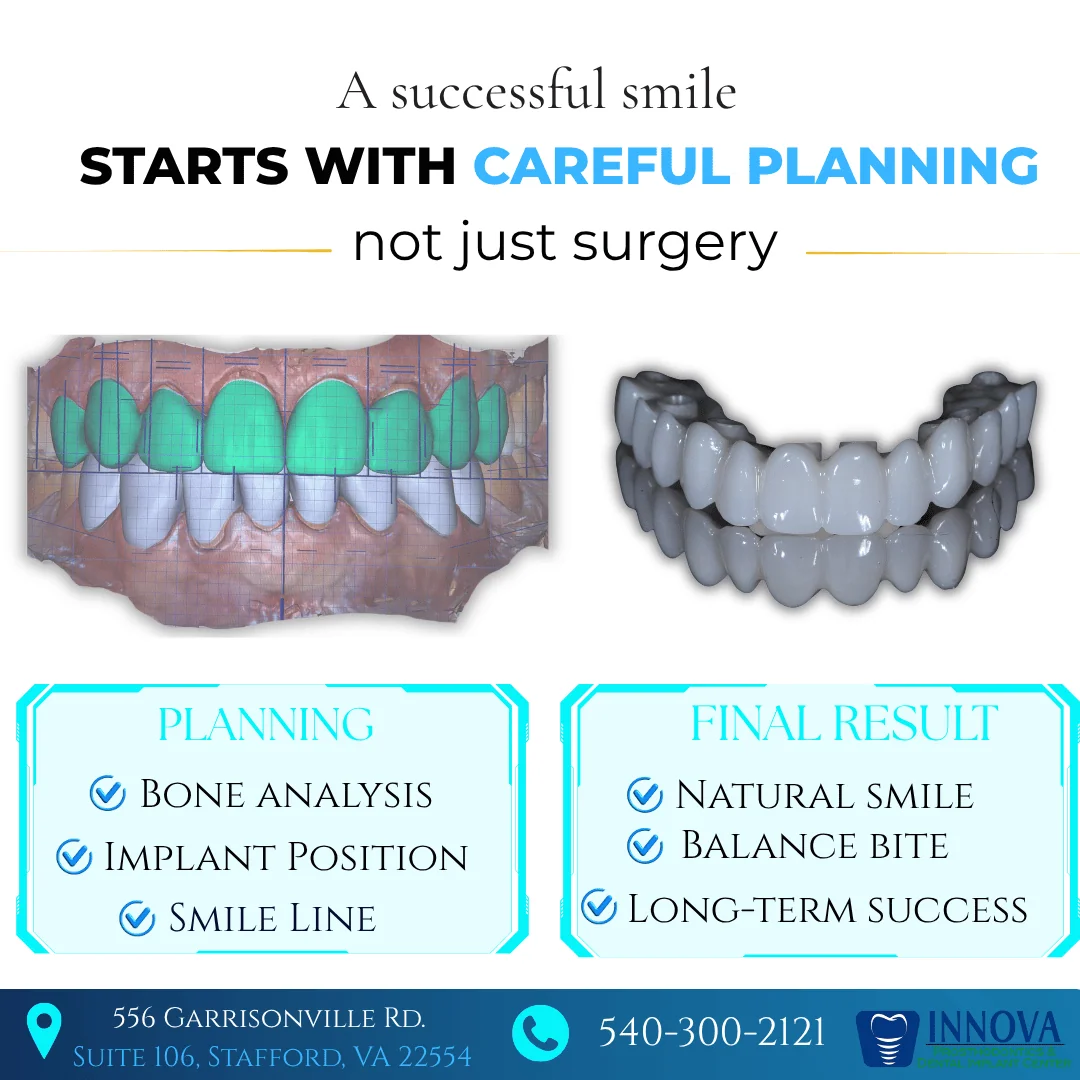
Most of the problems patients encounter after full-arch surgery don’t begin in the operating room—they begin long before surgery, during the planning phase. Full-arch implant treatment planning is the foundation of a successful, long-lasting smile. Before placing a single implant, a prosthodontist evaluates your bite, jaw relationship, and bone anatomy. They also assess your smile design and long-term restorative goals to create a personalized treatment plan. Many of the most common full-arch implant mistakes happen because clinicians rush or skip the planning process—not because of the surgery itself.
Why Treatment Planning Comes Before Surgery
Many providers treat implant placement as the starting point of full-arch treatment. In reality, full-arch implant treatment planning comes first.
A prosthodontist begins by working backward from the final result. First, they determine how the finished teeth should look, function, and fit together. Then, they decide where to place the implants.
This approach allows the surgical plan to support the final prosthesis. It also prevents the prosthesis from adapting to poorly positioned implants. During this stage, the prosthodontist evaluates bone quality, facial aesthetics, smile line, gum tissue, and bite before making any surgical decisions.
Why Prosthodontic Treatment Planning Matters More Than Most Patients Realize
An oral surgeon and a prosthodontist bring different expertise to a full-arch case. The best outcomes occur when both specialists work together from the beginning.
The surgeon focuses on placing implants safely and predictably within the available bone. The prosthodontist focuses on how those implants will support a functional, comfortable, and natural-looking set of teeth.
During prosthodontic treatment planning, the team positions every implant to support the final restoration. This collaborative approach reduces complications and improves long-term success.
Why Occlusion Matters for Long-Term Success
Occlusion—how your upper and lower teeth meet when you bite, chew, and speak—is one of the most overlooked aspects of implant treatment.
One of the primary goals of full arch implant treatment planning is creating a balanced bite. Proper occlusion distributes chewing forces evenly across every implant. Even a beautiful restoration can fail if uneven bite forces overload only a few implants.
Proper occlusal planning helps:
- Protect implants from excessive stress
- Reduce the risk of prosthetic fractures
- Improve comfort while chewing
- Extend the lifespan of the restoration
- Create a more natural bite and clearer speech
Getting occlusion right from the beginning is far easier than correcting it later.
Treatment Planning Determines Implant Position and Prosthetic Design
Many patients assume that placing more implants automatically creates a stronger restoration. Others believe fewer implants always mean a weaker result. Neither assumption is true.
Full arch implant treatment planning considers several important factors, including:
- Bone density and quality
- Jaw anatomy
- Arch shape
- Bite force
- Prosthetic design
- Long-term biomechanics
The prosthodontist chooses the ideal number and position of implants based on bone quality and how chewing forces will be distributed across the restoration. This biomechanical planning creates a durable restoration and reduces the likelihood of future repairs.
Planning Doesn’t End After Surgery
Treatment planning doesn’t end when your final bridge is delivered.
Long-term success requires regular maintenance appointments. Patients should also receive professional implant cleanings and periodic bite evaluations. These visits allow your prosthodontist to monitor the restoration and identify small problems before they become larger complications.
Patients who grind or clench their teeth can also protect their restoration by wearing a custom night guard.
A well-designed prosthesis is built to be maintained—not simply installed.
How Proper Planning Prevents Common Full-Arch Implant Mistakes
Many of the problems patients experience after full-arch implant surgery can often be traced back to inadequate planning before treatment ever began.
Comprehensive prosthodontic treatment planning helps prevent problems such as:
- Poor implant positioning
- Bite imbalance
- Prosthetic fractures
- Excessive implant stress
- Speech difficulties
- Esthetic compromises
- Difficult hygiene and maintenance
Thorough diagnosis and planning give patients a personalized roadmap before surgery begins. They also reduce surprises and improve long-term outcomes.
Frequently Asked Questions
Why is full arch implant treatment planning important?
Full arch implant treatment planning helps determine the ideal implant position, bite alignment, prosthetic design, and long-term function before surgery begins. This planning reduces the risk of complications and supports predictable outcomes.
Who performs full arch implant treatment planning?
A prosthodontist typically develops the restorative plan while coordinating closely with the implant surgeon. Together, they ensure the implants properly support the final prosthesis.
Can poor treatment planning lead to implant problems?
Yes. Inadequate planning can contribute to bite issues, uneven force distribution, prosthetic complications, implant overload, and additional corrective treatment.
What is included in full arch implant treatment planning?
Treatment planning often includes a CBCT scan, digital smile design, facial analysis, evaluation of bone and gum tissue, occlusion analysis, surgical guide design, and prosthetic planning.
Where to Go From Here
If you’re still researching your options, read 8 Mistakes to Avoid Before Full Arch Dental Implants to learn the most common mistakes patients make before choosing a provider.
You may also find What Patients Wish They Knew Before Full Arch Implant Surgery helpful if you want a better understanding of the consultation process, surgery, healing, and life with your new smile.