
FP1s FP3 Dental Implants: What Patients Need to Know (Without the Marketing Hype)
What Is FP1 Dental Implant Treatment?
FP1 is a teeth-only full-arch implant restoration.
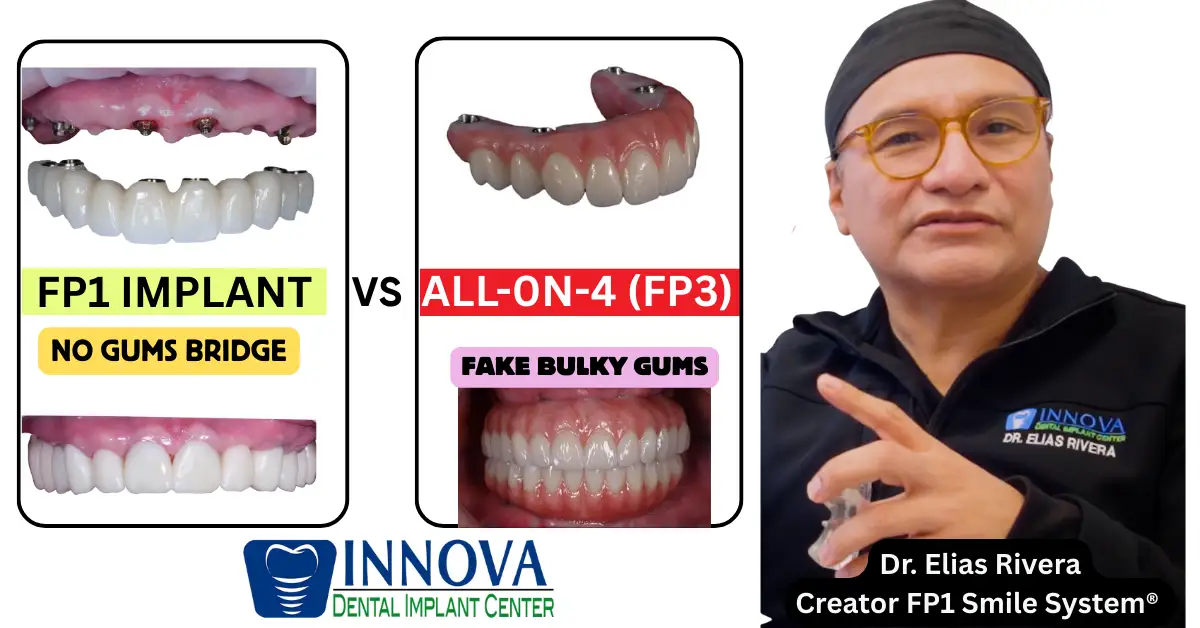
The goal is for the final teeth to look like they naturally emerge from your own gums, without bulky pink acrylic or artificial gum material.
For many patients, this results in a more natural feel and improved comfort compared with franchise-based All-on-4 treatments (also known as FP3), which typically replace both teeth and gums.
Key benefits of FP1 include:
- Natural-looking tooth emergence
- Lighter feel (less bulky)
- Easier hygiene access in many cases
- Designed for long-term stability
Important: FP1 is real — but it’s not a shortcut. It typically requires advanced planning and high precision.
Why FP1 Is Considered Highly Specialized
FP1 solutions are more demanding because it leaves less room to “hide” small mistakes done by your doctor. In many cases, the final look and comfort depend on millimeter-level details such as implant position and bite design.
That’s why FP1 usually requires:
- 3D CBCT evaluation with comprehensive and advanced digital planning
- Bite and jaw relationship analysis lead by a specialist in restorative dentistry
- Precise implant placement and prosthetic design
- Careful finishing for speech, comfort, and esthetics
High-volume franchise implant centers often prioritize speed and standardized workflows. As a result, true FP1 execution is less common. For this reason, when patients ask an oral surgeon or franchise-based provider about FP1, they are often told it is “not possible” — even when it may be achievable with the right planning and expertise.
What Is FP3 (And Why Is It So Common)?
FP3 restorations replace both teeth and missing gum tissue. This is often necessary because the treatment approach involves aggressive bone reduction to create space for the prosthesis. As bone is removed, the natural gum and tooth support are lost, requiring pink prosthetic material to replace what was surgically reduced.
For many patients, this results in a restoration that feels bulkier, looks less natural, and is more prone to food trapping beneath the bridge. These concerns are among the most common complaints reported by patients who have received gum-replacing (FP3) full-arch implant solutions.
This is precisely why so many patients begin searching for FP1 and “no bone shaving” implant options. They want teeth that emerge naturally from their own gums, preserve existing bone whenever possible, feel lighter and more comfortable, and avoid the artificial look and maintenance issues associated with gum-replacing designs..
FP3 can be a legitimately option when there is significant bone and soft-tissue loss, or when the smile line and bite require a more forgiving restorative design.
FP3 is also more commonly offered because it is a standardized approach that can be taught and implemented more easily. Many providers can begin offering FP3 treatments after limited continuing education, which is why this option is widely available at franchise-style and high-volume implant centers.
FP1 vs FP3 Dental Implants: Simple Comparison
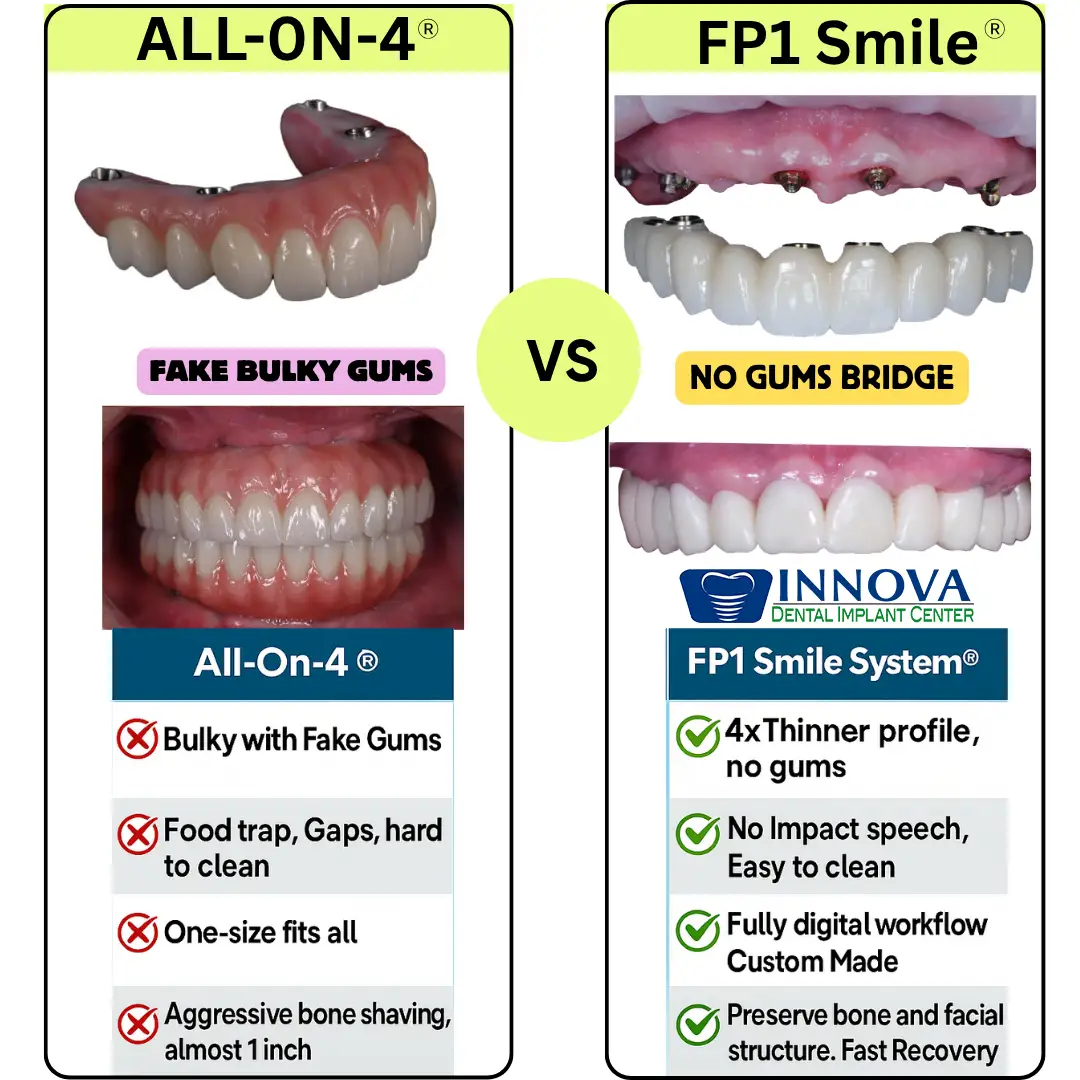
| Feature | FP1 (Teeth Only) | FP3 (Teeth + Gums) |
|---|---|---|
| Look | Most natural emergence | Can look fuller/bulkier |
| Gum replacement | Real gums only | Artificial gums included |
| Precision needed | Very high | Moderate |
| Cleaning | Often simpler access | More specialized cleaning |
Is FP1 Possible for Everyone?
Not always — and anyone promising “FP1 for nearly everyone” is oversimplifying.
Whether FP1 is appropriate depends on factors like bone position, bite collapse, smile line, and restorative space.
Bone loss does not automatically disqualify you from FP1. But it must be evaluated carefully with a proper exam and 3D imaging.
How to Avoid Implant Marketing Gimmicks
Be cautious with claims like:
- “FP1 for 90% of patients”
- “No bone work ever”
- “One technique fits all”
The safest approach is planning based on your anatomy — not a label. The right plan should prioritize comfort,
function, natural appearance, and long-term stability.
FP1 vs FP3: Myths vs Truth (Quick Guide)
Myth: FP3 works for most patients.
Truth: FP3 is most commonly used because it is faster and easier to standardize, not because it is always the best or most natural option.
Myth: FP1 is rare and only for a few patients.
Truth: FP1 is not rare—it is selective. When planned conservatively by a specialist, many patients may qualify.
Myth: FP3 is more predictable long-term.
Truth: FP3 is often more predictable for providers, but many patients later report bulkiness, food trapping, and higher maintenance.
Myth: FP1 requires more bone removal.
Truth: FP1 focuses on bone preservation. In many cases, more bone is grafted than removed.
Myth: FP1 does not work with bone loss or high smile lines.
Truth: FP1 is often ideal when natural anatomy and lip support are still present. High smile lines are more challenging for FP3, not FP1.
Myth: Thin zirconia FP1 bridges are weak.
Truth: With proper planning, precise surgery, and expert design, zirconia FP1 restorations can be thin, strong, and long-lasting.
Botton Line :
FP3 prioritizes speed and standardization.
FP1 prioritizes preservation, natural appearance, and long-term comfort.
The right choice depends on your anatomy, not marketing claims.is real — but it’s not a shortcut. It typically requires advanced planning and high precision.
Does It Hurt to Start With a Zoom Consultation?
A Zoom consultation isn’t a diagnosis — but it can be a smart first step. You can ask questions, understand your options,
and decide whether an in-person evaluation makes sense.
Schedule a Zoom Consultation with Dr. Rivera
Related reading:
What is the FP1 Smile System?
The harsh reality of FP3
FAQ: FP1 vs FP3 Dental Implants
Is FP1 the same as All-on-4?
Not necessarily. All-on-4 often refers to a standardized approach that frequently uses a gum-replacing bridge (FP3-style).
FP1 focuses on a teeth-only result and requires careful planning to support that design.
Which option looks more natural: FP1 or FP3?
FP1 typically looks the most like natural teeth because it avoids artificial gums. However, the most natural result depends on your
smile line, bone position, and prosthetic design.
Can I know if I qualify for FP1 from an online photo or X-ray?
No. A proper evaluation usually requires a full exam and a 3D CBCT scan. This helps determine bone position, bite relationships,
and restorative space.
Final Thoughts
FP1 dental implants are achievable and can be incredibly natural and long-lasting — but they require precision and planning.If you’ve been told FP1 is impossible (or promised it’s effortless), a clear consultation can help you understand what’s realistic for you.